

The Process behind Decaf Coffee
 By
By
It's a tale as old as time: You wake up in the morning, and the first thing on your mind is a fresh cup of coffee. But, for some people, it's not about the caffeine pick-me-up that coffee is known for; instead, it's about the ritual of drinking and enjoying a cup of coffee. Yes, we are talking decaf! Decaffeinated coffee, first created in the early 1900s, has been around for over one hundred years, yet the process of making this product hasn't changed much since its conception.
A complex blend of compounds, including caffeine and related molecules, are locked inside coffee and produce the distinct taste and flavor we know when the beans are roasted. So the process of removing a key molecule like caffeine from a coffee bean is no small task and can be pretty labor-intensive. On average, a single arabica coffee bean contains 1.9 milligrams of caffeine compared to a single robusta coffee bean that can have 2.9 milligrams of caffeine.
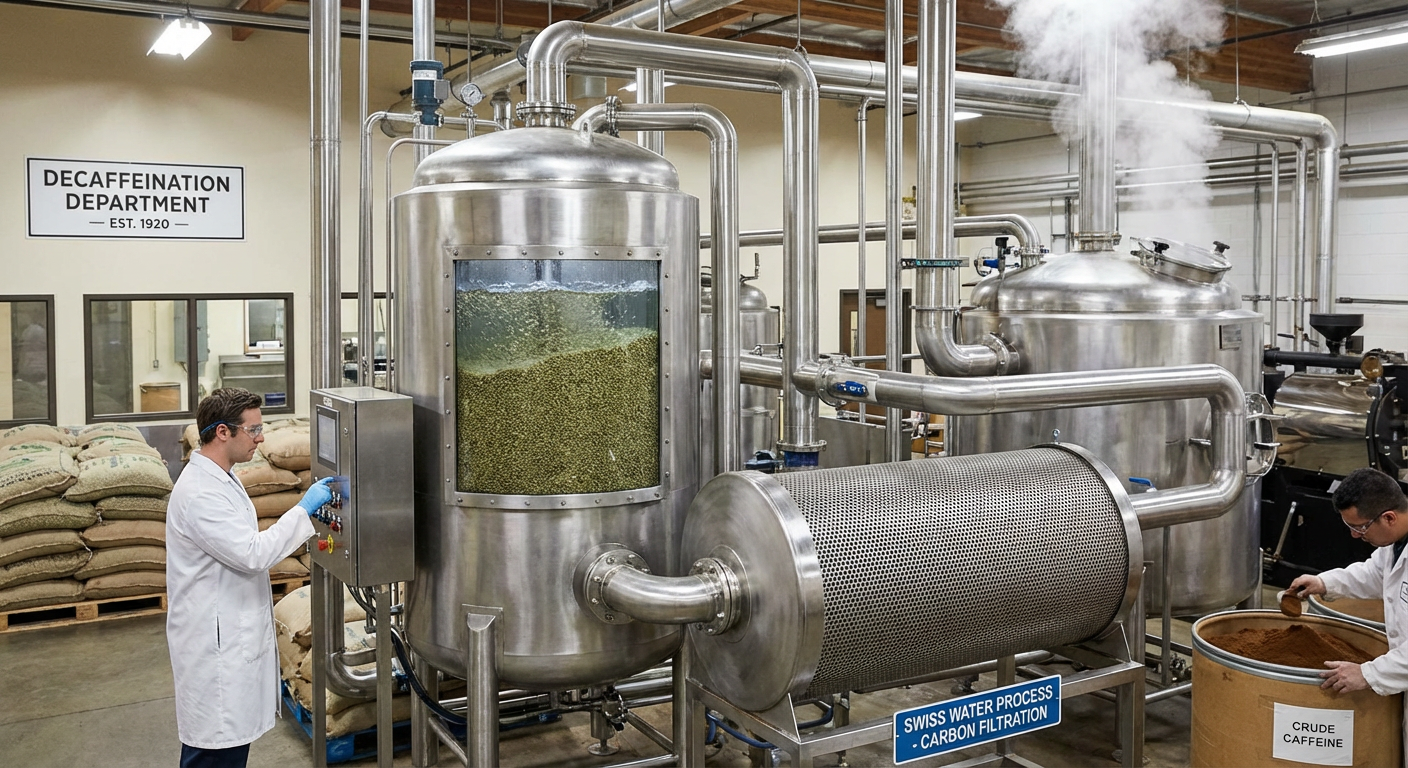
One technique known as the Direct Solvent Decaffeinated Method removes caffeine directly from the coffee beans and leaves (most of) the other flavor compounds behind. This process is done by steaming or boiling green, unroasted beans to pull the caffeine from the bean interior. Then the caffeine molecules are typically washed out using solvents like methylene chloride or ethyl acetate. Like how sugar dissolves in water, the caffeine dissolves in the chemical wash, resulting in coffee beans with little to no caffeine compounds left.
Another method for producing decaf coffee goes some steps further to enrich the flavor. After the solvents have removed the caffeine compounds from the coffee beans, decaf companies brew a strong decaffeinated brew to soak the beans to infuse them with more aroma and flavor.
There have been a few technological advances we can thank science for, including a method called the Swiss Water Process, which uses carbon filters rather than solvents to remove the caffeine from the fresh beans. However, this process does cost more.
And an even more advanced approach, which is quite costly compared to other methods, uses highly pressurized CO 2. This process is called the Carbon Dioxide Method and uses high pressured CO 2 to adopt properties of multiple states at once, so it flows like gas but can maintain liquid density. In this form, CO 2 binds to the coffee beans and removes the caffeine compounds from freshly water-soaked coffee beans.
But what happens to the caffeine that is extracted from coffee beans? Crude caffeine, as it is known, is a brown powder substance that contains all of the extracted caffeine, and it is a huge commodity that is sold to other manufacturers. In addition, crude caffeine is added to other caffeinated beverages like sodas, energy drinks, and candy and beauty products.
In the future, another hopeful source for decaf coffee is in newly discovered strains of naturally decaffeinated coffee plants. These coffee bean strains would eliminate the extra processing that can affect the flavor, leaving a bolder decaffeinated brew. However, for various reasons, such as needing to scale up to commercial production, this commodity is hindered from entering the market.
Regardless of all the hard work that goes into decaffeinating coffee and all of the technological advances, many coffee lovers still feel that decaf coffee is subpar in taste and flavor compared to regular beans. Even with the 100+ years of experience, some coffee manufacturers haven't been able to perfect this practice of removing caffeine without altering the flavor profile to some degree.
Nevertheless, rest assured that SunriseCoffeeLA will always go the extra step in testing and tasting all of our blends, ensuring you have the best tasting cup of coffee, caffeinated or not!