

What is Coffee Cupping?
 By
By
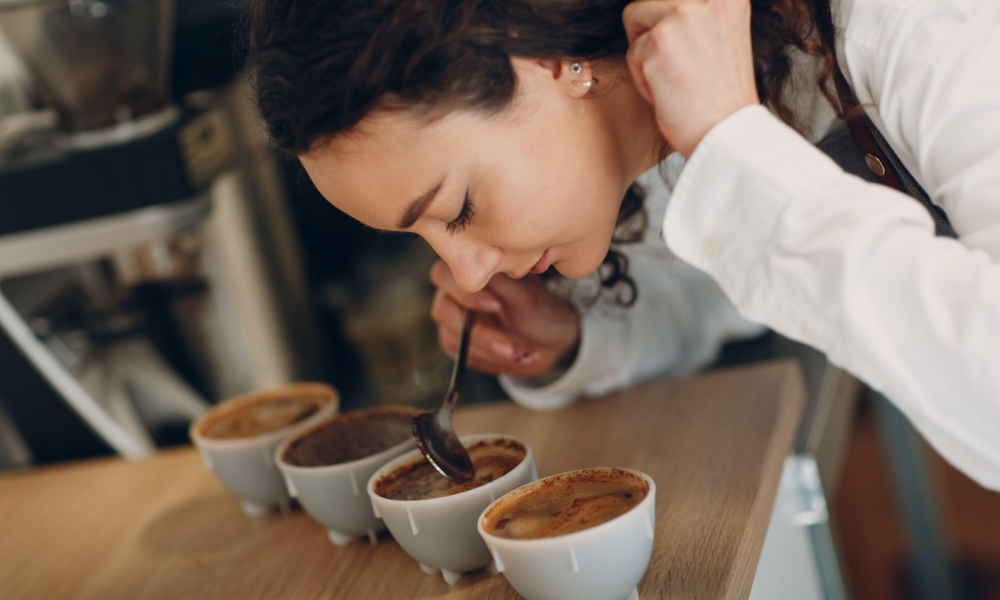
Most coffee lovers usually have a "go-to" coffee, whether it's a particular roast, brewing method, or -ahem- favorite coffee company. So what is it that draws you more to one coffee over another? The art of coffee cupping, the term for coffee tasting, is a complex skill to master. Producers and buyers around the world widely use the technique of coffee cupping to check the quality of a batch of coffee. In cupping, coffee's aspects include cleanness, sweetness, acidity, mouthfeel, and aftertaste. Besides being a quality control method, cupping is an excellent way to increase your knowledge about coffee. With practice, you can develop a palate for all the different hidden components within a simple coffee cup and distinguish what flavors draw you in most.
To start developing coffee cupping skills, we will begin with the basic guidelines to identify flavor profiles.
-Always taste coffee black, no additives. Cupping is best done with light or medium roasts, whereas dark roasts are more for tasting the roasting process than the actual coffee bean.
-Best to start with a clean palate and drink water before tasting
-When tasting, start slow with small sips. Then take a nice big slurp to swirl around in your mouth for five seconds, coating your mouth in the coffee.
-Have a flavor wheel handy; this will help you in recognizing the flavors
-Write down what you taste, identify whatever notes your senses pick up on.
So why is this method called "Cupping?" They named this practice after the specialty deep bowled spoons that professionals use to sample the coffee. First, they grind coffee beans to a coarse consistency, in which they pour over water that's just off the boil in a small bowl. After the grounds steep for three to four minutes, the infusion is mixed, and the foamy layer of coffee grounds is removed from the top of the cup using spoons. The coffee needs to cool before tasting, to allow the flavors to emerge fully.
It's a good idea to focus on typical flavor notes such as nutty, chocolate, or fruity when you are just beginning. Similar to wine, there are endless flavor notes since each harvest can be different. Flavors can be directly affected by weather, altitude, soil, and cultivar.
For a more casual cupping experience, brew up a batch of your favorite coffee using a French press or your preferred method of brewing and pour it into smaller cups. Take your time to appreciate how the coffee smells and the unique flavors on your tastebuds. You can discover nuances you never thought existed in a cup of coffee. If you feel daring, maybe try a new blend of SunriseCoffeeLA to put your new coffee knowledge skills to use!