

Arabica vs Robusta Coffee: What’s the Difference?
 By
By
Coffee lovers often hear about Arabica and Robusta beans, the two main species responsible for most of the world’s coffee production. While both come from the coffee plant family, they differ significantly in flavor, caffeine content, growing conditions, and price. Understanding these differences can help you choose the type of coffee that best matches your taste preferences and brewing style. Arabica accounts for roughly 75–80% of global coffee production, while Robusta makes up a smaller but still significant portion of the market.
One of the most noticeable differences between Arabica and Robusta is flavor. Arabica beans are known for their smooth, sweet, and complex taste, often featuring fruity, floral, or chocolate-like notes. They also have higher natural sugar and lipid levels, which contribute to their rich aroma and balanced acidity. Robusta, on the other hand, typically has a stronger and more bitter flavor profile, often described as earthy, woody, or nutty. This bold taste is why Robusta is frequently used in espresso blends and instant coffee products.
Another key difference is caffeine content. Robusta beans contain significantly more caffeine than Arabica—usually about 2.2–2.7% compared to Arabica’s 1.2–1.5%. The higher caffeine level not only produces a stronger energy boost but also contributes to Robusta’s bitter taste. Interestingly, caffeine acts as a natural pesticide for the plant, which is one reason Robusta plants are more resistant to pests and diseases.
The two coffee types also differ in growing conditions and cultivation difficulty. Arabica plants are delicate and typically grow best at higher altitudes with cooler climates and consistent rainfall. They require more care and are more vulnerable to diseases such as coffee rust. Robusta plants are much hardier and thrive in lower-altitude regions with warmer temperatures. Because they are easier to grow and produce higher yields, Robusta beans are generally less expensive than Arabica.
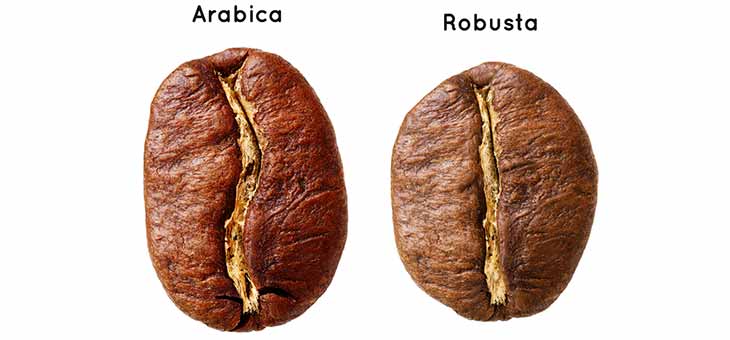
Finally, the appearance and brewing characteristics of the beans vary. Arabica beans are usually oval-shaped with a curved center line and tend to produce a lighter, more aromatic cup. Robusta beans are smaller and rounder with a straighter center cut and often create a thicker crema in espresso due to their chemical composition. These physical differences also influence how each bean behaves during roasting and brewing.
In the end, choosing between Arabica and Robusta depends on personal preference. If you enjoy a smooth, complex, and aromatic coffee, Arabica is usually the preferred choice. If you prefer a bold, high-caffeine brew with a stronger body, Robusta might be the better option. Many coffee brands even blend the two beans to balance flavor, strength, and cost—giving you the best of both worlds in a single cup.