

5 Common Mistakes Beginners Make with Fresh Roast Roasters (and How to Avoid Them)
 By
By
Home coffee roasting has become increasingly popular, and beginner-friendly machines like the Fresh Roast series make it easier than ever to roast coffee at home. However, many new users quickly discover that roasting coffee involves more than just pressing a button. Small mistakes in batch size, timing, or cooling can dramatically affect flavor. Understanding these common beginner errors can help you get better results and enjoy consistently delicious coffee.
1. Overloading the Roasting Chamber
One of the most common beginner mistakes is adding too many green coffee beans to the roasting chamber. Fresh Roast machines use a fluid-bed system, meaning hot air must circulate freely to keep beans moving during roasting. When the chamber is overfilled, airflow becomes restricted, leading to uneven roasting where some beans scorch while others remain underdeveloped. Beginners should follow recommended batch sizes and start with slightly smaller batches until they understand how the beans move during roasting.
2. Ignoring First and Second Crack
Coffee roasting includes two key audible milestones: first crack and second crack. First crack marks the transition from light to medium roast, while second crack indicates darker roasting stages. Many beginners fail to listen for these cues and rely only on time or color. This can result in underdeveloped coffee if the roast ends too early, or burnt, bitter beans if it goes too long. Roasting in a quiet environment and closely monitoring the cracking sounds helps achieve better control over roast levels.
3. Skipping Proper Cooling
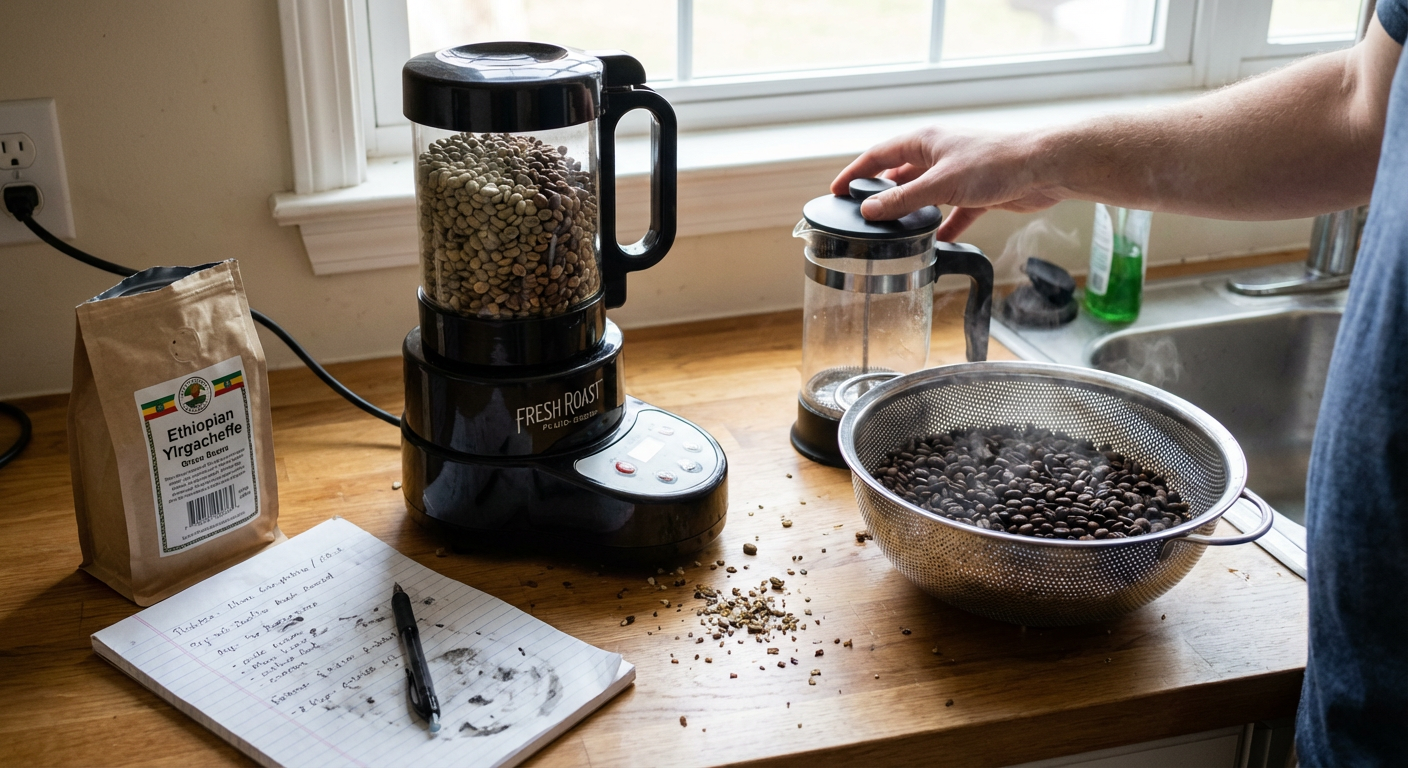
Another frequent mistake is leaving beans in the roasting chamber after the roast finishes. Coffee beans retain heat and will continue cooking even after the heat source stops. Without rapid cooling, the beans can over-roast and develop flat or burnt flavors. Using the roaster’s built-in cooling cycle or transferring beans to a metal colander for quick cooling helps stop the roasting process at the desired point.
4. Not Tracking Roast Profiles
Many beginners roast “by feel” and fail to record what happened during the roast. Without notes on time, airflow, heat settings, and crack timing, it becomes almost impossible to reproduce a successful roast. Experienced roasters recommend keeping a simple log of each batch, including bean origin and tasting notes. Over time, this record helps you refine your roasting technique and consistently repeat great results.
5. Brewing Beans Too Soon After Roasting
Freshly roasted coffee smells amazing, but brewing it immediately is a common mistake. After roasting, beans release carbon dioxide in a process called degassing, which can negatively affect extraction and flavor if brewing happens too soon. Most coffees taste better after resting for 24–72 hours, allowing gases to escape and flavors to stabilize. Storing beans in an airtight container during this rest period helps preserve freshness.
In the end, mastering a Fresh Roast roaster comes down to patience, observation, and practice. By avoiding these common mistakes—overloading the chamber, ignoring roast stages, skipping cooling, neglecting roast notes, and brewing too soon—you’ll improve your roasting consistency and unlock richer flavors in every batch. With time and experimentation, beginners can quickly turn their home roaster into a powerful tool for crafting exceptional coffee.