

The Science of Coffee Roasting: Heat, Time, and Airflow Explained
 By
By
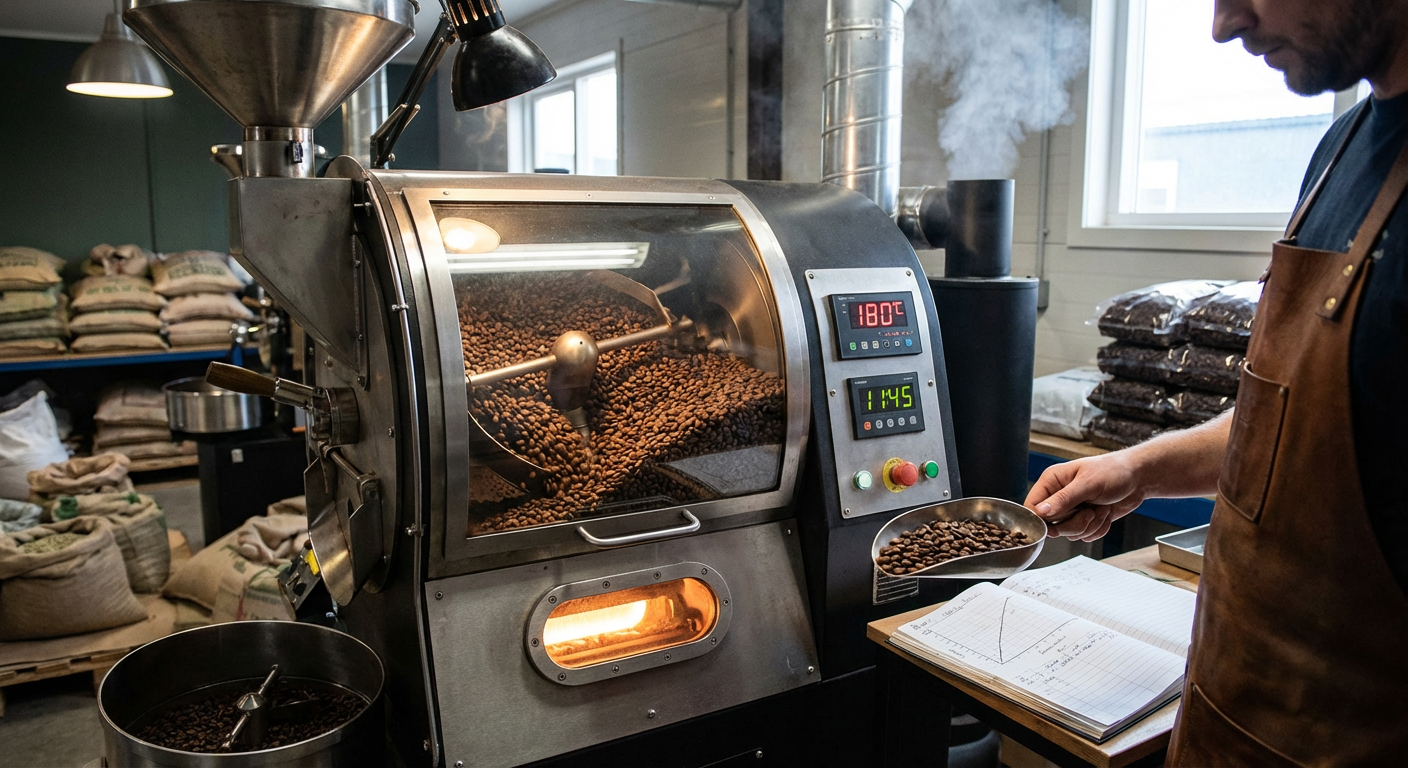
Coffee roasting is a fascinating blend of chemistry and physics that transforms raw green coffee beans into the aromatic beans used for brewing. During roasting, heat triggers complex chemical reactions that develop the color, flavor, and aroma of coffee. Initially, the beans absorb heat in an endothermic process, but as temperatures rise—typically around 175°C (347°F)—they begin releasing heat themselves, accelerating the roasting reactions. At the same time, the beans lose about 15–18% of their mass, mostly from moisture and volatile compounds, which significantly changes their structure and flavor potential.
Heat: The Engine Behind Flavor Development
Heat is the driving force of coffee roasting because it initiates the chemical reactions that produce flavor. Three main forms of heat transfer occur during roasting: conduction (direct contact with hot surfaces), convection (hot air circulating around the beans), and radiation (heat emitted from heating elements). Proper heat control ensures the beans roast evenly. Too much heat early in the process can scorch the outside while leaving the inside underdeveloped, whereas insufficient heat can result in flat, “baked” flavors that lack complexity.
Time: The Roast Curve That Shapes Taste
Time determines how long beans stay in each stage of the roasting process, which directly affects the final flavor profile. Roasting usually moves through three key phases: drying, browning (also known as the Maillard reaction stage), and development. During the Maillard reaction, sugars and amino acids react to form hundreds of flavor compounds that create caramel, nutty, and chocolate-like notes. Short roasting times may produce underdeveloped coffee, while longer roasting times deepen sweetness, reduce acidity, and create darker roast characteristics.
Airflow: The Hidden Variable in Roasting
Airflow is often overlooked, but it plays a crucial role in controlling the roasting environment. Proper airflow distributes heat evenly, removes smoke and chaff from the roasting chamber, and influences how flavors develop in the beans. By adjusting airflow, roasters can change the balance between conductive and convective heat transfer. Too much airflow can cool the roast and lead to sour flavors, while too little airflow may trap smoke and create overly smoky or bitter notes.
The Chemistry of Flavor Transformation
As roasting progresses, several chemical reactions shape the final taste of coffee. The Maillard reaction produces complex aromatic compounds, while caramelization breaks down sugars to create sweetness and body. At higher temperatures, pyrolysis occurs, releasing carbon dioxide and forming bold, smoky flavors typical of darker roasts. These reactions, combined with careful control of heat, time, and airflow, allow roasters to highlight specific flavor characteristics from each coffee bean origin.
Why Balancing These Variables Matters
Successful coffee roasting is about balancing heat, time, and airflow to guide the roast profile. Small adjustments in any of these variables can dramatically change the cup’s aroma, acidity, body, and sweetness. Skilled roasters monitor temperature curves, airflow levels, and roast timing to consistently produce high-quality coffee. Understanding the science behind these variables helps both home roasters and professionals unlock the full flavor potential hidden inside every coffee bean.